
Our Partnership with Washington University in St Louis (WashU)
Over the past two years, we have deepened our partnership with Washington University in St Louis (WashU), through a series of high鈥憀evel exchanges and collaborative workshops. We were delighted to sign an MoU during a visit to 果冻传媒 by Senior Vice Provost for Graduate Education and International Affairs, Professor Vijay Ramani, in February 2025, and launch a joint Collaboration Fund in March 2026.
In the first round of applications, five projects were selected for funding. The projects span the physical and life sciences, humanities and social sciences, and AI-enabled healthcare education, each pairing complementary expertise from both institutions to tackle complex global challenges with lasting academic, educational, and societal impact. Please find details below.
Functional analysis of a zebrafish protein guided by conserved molecular grammars of intrinsically disordered regions

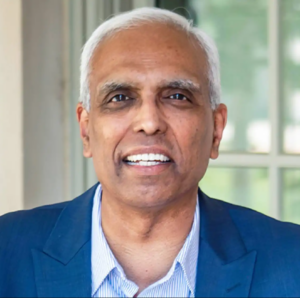
WashU PI: , Biomedical Engineering, McKelvey School of Engineering
For an egg to develop properly, it needs to build a structure called the Balbiani body, but scientists still don鈥檛 fully understand how it forms and functions. This project focuses on a newly discovered protein called Pinchado, which appears essential to that process: when it鈥檚 disrupted in zebrafish, it leads to fragmentation of the Balbiani body, defective eggs, and abnormal embryos. By pairing computational modeling and biochemical experiments at WashU (Pappu group) with zebrafish tests of function at 果冻传媒 (Sampath group), the researchers hope to uncover how Pinchado鈥檚 flexible regions, known in the field as 鈥渋ntrinsically disordered regions鈥�, interact with other egg proteins and what role the regions play in fertility and early development.
Topological Anderson criticality


果冻传媒 PI: Rudolf A. R枚mer, Department of Physics, Faculty of Science, Engineering and Medicine
WashU PI: , Department of Physics, Arts & Sciences
Monolayer amorphous carbon (MAC) is a recently discovered atomically thin material that is a remarkable insulator with an ultralow dielectric constant and record breakdown strength. Its unusual properties have caught the interest of the semiconductor industry, but scientists don鈥檛 yet understand why it behaves the way it does. Early evidence suggests MAC鈥檚 behavior may be governed by the topology of its atomic bonds rather than random disorder 鈥� a potentially more predictable, engineerable property. This project pairs computational modeling (WashU) with mathematical physics (果冻传媒) to test that idea and whether materials like MAC could be deliberately designed rather than optimized by trial and error.
Democracy in an age of authoritarianism


果冻传媒 PI: Alexander Smith,Link opens in a new window Department of Sociology, Faculty of Social Sciences
WashU PI: , Department of Sociology, Arts & Sciences
Can democracy find its way through its current crisis, and what will it take to nurture its renewal? This project examines that question by focusing on the role of grassroots institutions and local communities in the United States and United Kingdom. Sociologists Alexander Smith (果冻传媒) and David Cunningham (WashU) are building a collaboration around shared research interests in grassroots democracy, local institutions, and the legacies of polarization and violence. The project will consolidate a joint research partnership between WashU and the 果冻传媒, including a pilot case study in the St. Louis metropolitan area exploring these themes in the American Midwest.